Postmodernism is the name for the time we live in. It's what happens after 500 years of capitalism. The way people relate to each other and to objects has fundamentally changed.
America is the prime example. American consumer culture runs on symbols. A simple sneaker isn't footwear anymore but now a statement about who you are, the community you belong to, what status you hold. A luxury bag is not a bag anymore in postmodernism but rather a signal to everyone who sees it.
Under postmodernism we've stopped buying objects. We instead buy the stories attached to them. THE OBJECT HAS TRANSCENDED ITS UTILITY VALUE (practical use) AND IS NOW USED FOR ITS SIGN VALUE (what it tells others). You are assigned a role in our consumerist social system by the cultural fluency of your consumption choices.
Black American consumer culture is the highest-context version of this system American capitalism has to offer. It operates on codes of in-group knowledge layered over identity, status, authenticity. Sneakers are social currency. Luxury brands become microphones. They become vessels for communicating to others the value of the person behind the brand's logo. (The postmodern negro, he who stands behind the logo.) All people in this group are attuned to the meanings associated with each logo and choose from these pre-agreed upon meanings to construct identity.
I encourage brands to firstly consider what their brand is saying to others, and focus on product specs second.
I grew up inside this system blind to it as a fish lives in water. The only difference is that I'm the fish that left its tiny tank, went to university to study hydrolysis, and now consult fishermen on how to increase their yield. This combination of native fluency and analytical architecture is what your brand desperately needs to succeed.
Your product enters a market where it immediately becomes a symbol. You don't control what symbol it becomes. The market does. Your job, with my help, is to ensure that whatever symbol the market assigns to you converts back into sales and becomes part of an aspirational identity for the user.
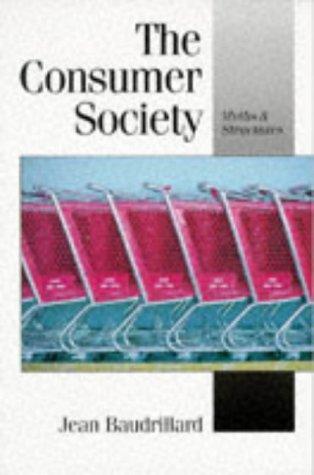
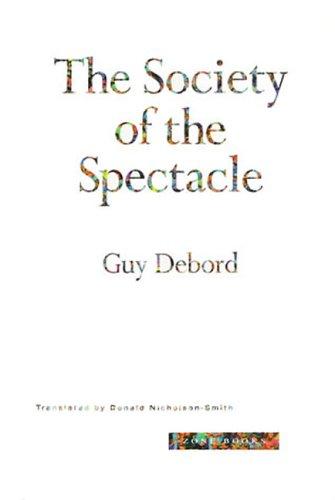
French philosophers such as Baudrillard, Debord, and Barthes wrote the operating manual. I'm the one who can read it to you in the language the market speaks.
"Think of American consumerism as a gun. I am the one gifting you a smoother trigger."
A note on the term. When I say the Postmodern Negro, yes, I am talking about Black people. But more precisely I am naming a consumption pattern. It began in Black America, where the symbolic logic of objects runs hottest, but it has grown to describe anyone who reads and wears brands as language. The race is the origin. The behavior is the definition.
The Postmodern Negro is the most fluent consumer in America. He reads brands the way other people read books. A chain is not jewelry. A grill is not dental work. A stack of cash held against the ear is not a phone call. Every object is a sentence, and he has been speaking this language his whole life while the market is still sounding out the words.
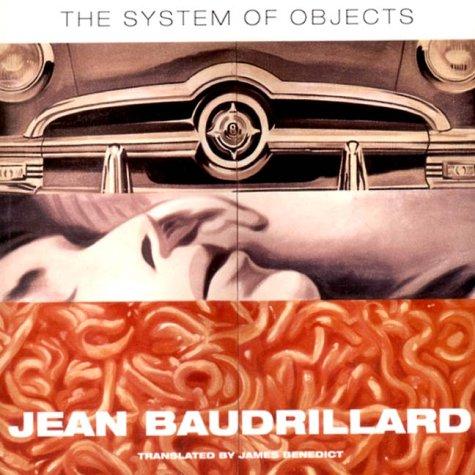
This is not about money. It is about literacy. He assigns meaning to objects faster than companies can manufacture them, and he drops them the second the meaning runs dry. He took a system of symbols nobody handed him and turned it into a way of moving through the world. Baudrillard wrote about the system of objects in a Paris study. The Postmodern Negro lives it on a Miami corner and never cites the source.
Study his psychology and you can see where American taste is headed before it arrives. He is the test. If your brand earns its place in his world, the rest of the country follows. If it doesn't, you were never really in the market to begin with.



The RMPM tells you where your brand sits. Revere's Law tells you why it rises or dies. These two tell you how the Postmodern Negro himself actually moves.
Every object in this market is radioactive. It enters with a symbolic charge, and that charge decays. The Postmodern Negro adopts it while it is still scarce and coded, rides it at peak, and drops it the second it goes legible to the mainstream. The moment a brand finally feels safe to corporate America is the exact moment it dies in here. The mass visibility you are chasing is the death signal, not the win. Your window is the gap between adoption and saturation. Miss it and you bought a corpse.
Legitimacy here is conferred, never claimed. It moves down a ladder: originators on the ground, then tastemakers and artists, then mainstream celebrity, then corporate. A co-sign only counts if it comes from the right rung, in order. Buy the top of the ladder without earning the bottom and the market reads you as a tourist instantly. That inverted ladder is the entire Bud Light autopsy in one picture.
Baudrillard argued that in modern society, objects no longer satisfy needs β they signify social position within a code. Consumption is the systematic manipulation of signs. A sneaker is not footwear. It is a claim about who you are, which community you belong to, and what values you hold. Brands that misread the sign system are not just wrong β they are illegible. And illegible brands get rejected without explanation.
Guy Debord (1967) argued that modern life is mediated by spectacle β a social relation between people mediated by images. In Black American culture, this manifests through the elevated role of visual culture, celebrity, fashion, music video, and digital presentation. The spectacle isn't superficial. It IS the market. Brands that enter through the spectacle but lack symbolic alignment with the underlying values get exposed and rejected β often virally.
Roland Barthes showed how ordinary cultural objects carry mythological meaning β a second layer of signification built on top of the literal. In Black American consumer culture, luxury goods, streetwear, music artists, and even slang operate as myths: they carry ideological weight beyond their surface meaning. Brands that understand only the first order (the product) miss the second order (what it means to be seen with it).
Essays applying this theory directly to market strategy: